How AI Legal Defense Levels the Playing Field
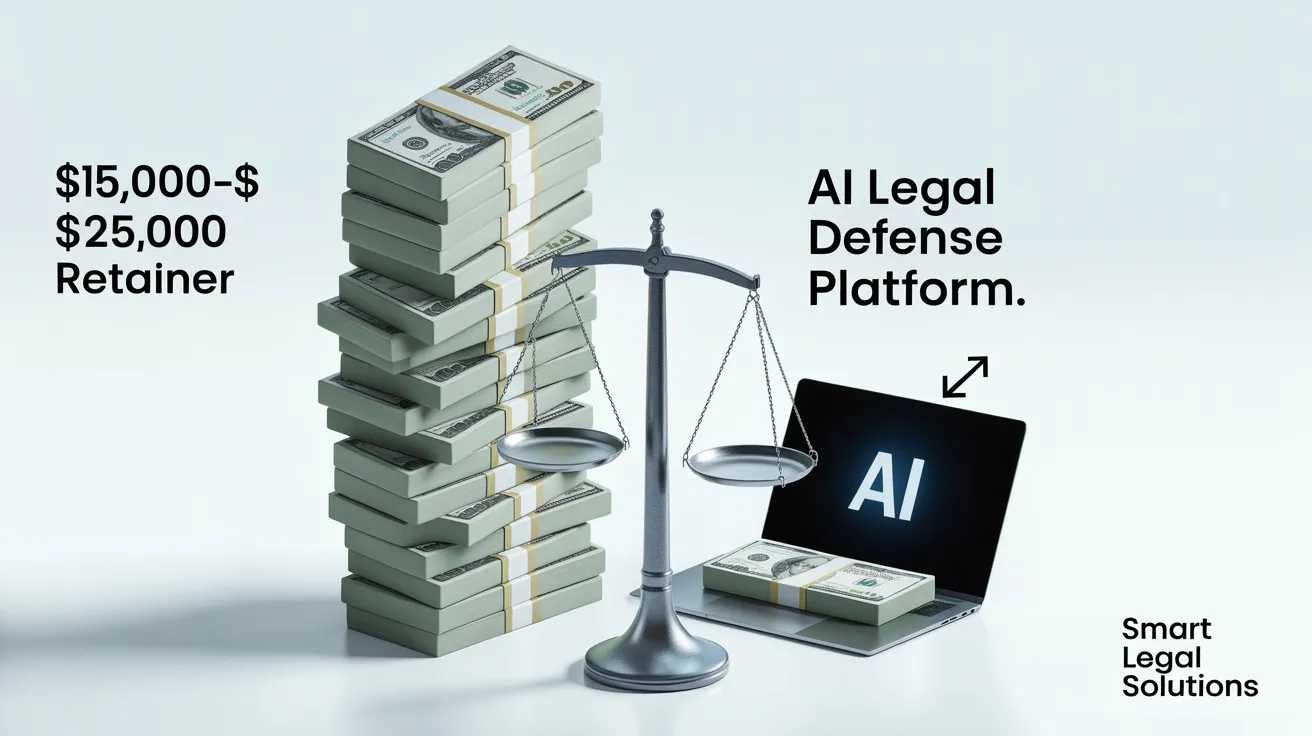
The message arrives like a digital punch to the gut. Your inbox reveals a message with a subject that freezes you in place: "IMMEDIATE ACTION REQUIRED: Payment Demand" or "NOTICE: Stop All Activities." Your focus instantly changes from sales projections and marketing plans to a single, frightening figure. A claim seeking $50,000, $100,000, or even more for an alleged copyright violation or a historical unpaid obligation. Your immediate reaction is to seek legal counsel, but this reaction is soon accompanied by a second wave of anxiety when you learn about the retainer fee: $10,000, $15,000, or up to $25,000 for initial representation. Many entrepreneurs face this devastating choice-a decision between a settlement that could destroy your business and an economically devastating court fight.
Consider a third possibility? What if you could defend yourself smartly, effectively, and within budget? For more and more entrepreneurs, that third option is becoming a reality through AI legal defense. This isn't meant to substitute legal professionals, but about changing the rules of the game. It's about utilizing innovative solutions to analyze threats, prepare responses, and understand your rights before investing in expensive legal services. This is the story of how small business owners are turning the tables on legal bullies, reducing massive legal expenses, and discovering the strength to stand up for their companies in an environment of growing legal challenges.
Critical Key Points
- The Power Dynamic is Shifting: AI technology now allows business owners to manage various legal challenges on their own, decreasing dependency on costly attorneys for preliminary legal responses.
- Understanding is Your Greatest Shield: Legal threats against small businesses often serve as scare tactics and usually lack solid legal basis. Knowledge of basic copyright law and debt validation procedures serves as your strongest defense.
- AI as a Research Assistant: AI technology can process legal documentation, identify weaknesses in claims, and research relevant case law in much faster than traditional methods, cutting down on expensive billable hours.
- Financial Considerations are Key: Considering typical legal retainers that begin at $10,000-$25,000, artificial intelligence-based solutions offer a cost-effective first line of defense at a significantly lower price point.
- Know When to Contact Professional Assistance: Artificial intelligence is a helpful tool for preparation and initial response, but it is not meant to be an alternative to a qualified lawyer concerning complex legal situations or ongoing court cases.
Small Business Legal Risk Assessment and Understanding
Running a small business is wearing multiple hats. You find yourself acting as the executive, marketing specialist, personnel manager, and sometimes even the custodian. Dealing with lawsuits is the last thing you want when managing your business. Regrettably, today's business landscape is filled with legal risks. A 2023 study shows that U.S. small businesses face costs of $160 billion per year from legal disputes. These aren't just major lawsuits making headlines; it's the regular legal issues that gradually drain businesses.
The Emergence of the Legal Intimidator
Numerous legal threats have little to do with justice; they are fundamentally a numbers game. Predatory firms, copyright trolls, and aggressive collectors send out countless threatening letters, knowing that a certain percentage of people who receive them will be too intimidated or uninformed to defend themselves. They rely on the fact that legal representation expenses are often higher than the demanded settlement amount. This creates a perverse incentive to pay, regardless of whether the claim has merit. These operations function as legal bullies, utilizing intimidation as their principal tactic.
Key Risks Entrepreneurs Must Navigate
Even though legal issues can arise from various sources, certain recurring challenges consistently impact small enterprises:
- Copyright Infringement Claims: These issues are frequently associated with images utilized on corporate web pages and blogs. Many of these claims are automated and distributed without actual human oversight of context or fair use considerations.
- Debt Collection Notices: These notices may be for old, challenged, or unverified debts. Collection companies commonly acquire debts for minimal costs and then use aggressive tactics to demand complete payment.
- Cease and Desist Letters: These legal documents can address a broad spectrum of matters, from trademark disputes to contract violations. They are often used to deter competition or silence opposition.
- Banking and Payment Disputes: Disagreements involving financial institutions or payment services can suspend financial access and operations, forcing business owners to take defensive measures.
When business owners are confronted with these issues, it often seems like a major crisis. What's important to understand is that a majority of these situations are essentially education and preparation matters, rather than legal issues.
Understanding Legal Defense Costs: Traditional Methods Falling Short for Small Businesses
The typical process for handling a legal threat is clear-cut: you engage legal counsel. For large corporations with in-house legal teams and significant financial means, this is a standard expense of doing business. For a small business, it's a significant financial strain. The typical legal expenses for a small business is about $13,300 annually, but this figure can rise significantly when court proceedings begin, with fees ranging from $3,000 to over $150,000.
Exploring Retainer Relationships
The most significant immediate obstacle is the attorney retainer. A retainer is essentially a down payment on a lawyer's services, and when it comes to litigation, it's rarely below five figures. This creates what might be described as the "retainer trap." A business owner might receive a request for $8,000. A lawyer quotes a $15,000 retainer to defend against it. When looking at the numbers, the "logical" decision seems to be settling for the $8,000 settlement, even if the allegations are unfounded. This is the approach that legal bullies rely on. They've deliberately priced their demands to be slightly under the cost of entry for legal representation.
Incentive Misalignment
Furthermore, the traditional legal approach is structured on billable hours. When a case takes more time, the lawyer earns more money. While ethical lawyers aim for efficiency, the system itself tends to reward extended litigation and complex procedures. This creates a fundamental disconnect with what matters to business proprietors, who seek quick and economical solutions. The key priority for the business owner is to solve the problem, not to engage in a time-consuming and expensive legal procedure.
How Artificial Intelligence is Reshaping Legal Advocacy for Entrepreneurs
Over the years, expensive legal representation produced a significant void in the market. No feasible alternative was available for business owners who were unable to finance an attorney but refused to give in to baseless claims. Artificial intelligence is currently bridging that gap. It's not a magic wand, but it serves as a valuable resource that creates equal opportunities by substantially lowering the expenses and duration associated with the crucial first phases of defending against legal claims.
AI as a Super-Powered Paralegal
Think of AI similar to a paralegal possessing the ability and perfect recall to process enormous volumes of documents every minute. This is how it's being utilized:
- Document Analysis: Intelligent algorithms can thoroughly review a demand letter or legal complaint and immediately extract key information, like specific allegations, cited laws, and monetary claims. The AI evaluates the document with extensive case databases to discover trends and possible flaws.
- Legal Research: In place of an attorney dedicating extensive periods (at $300+ per hour) investigating legal precedents, AI technology can scan through legal repositories and present pertinent legal examples instantly. The system can identify details on consumer protection laws, fair use guidelines, or debt validation requirements pertaining to the situation.
- Drafting Assistance: AI can assist with creating preliminary correspondence. After inputting the case information and applicable legal standards, it can generate a professional, organized response that establishes your position and puts the opposing party on notice that you will defend your position firmly.
This is where the game changes. The preliminary review and assessment, which usually amounts to thousands in legal fees, can be handled with a fraction of the cost in an AI-enhanced educational tool.
Understanding the AI Legal Defense Framework: A Systematic Approach
Utilizing AI for legal defense isn't simply blindly relying on a chatbot. It's about following a systematic approach to analyze the challenge, understand your standing, and react from a position of strength. This framework generally encompasses three key phases.
Phase 1: Assessment and Triage
The first step is to leverage artificial intelligence to analyze the situation at hand. You can upload the threatening legal document into an AI system and ask it to perform an initial analysis. The objective is to answer several key questions:
- What is the primary claim
- What specific laws or regulations are being referenced?
- Has the party making the claim proven they're the true rights holder?
- What evidence have they presented?
- Are there any immediate red flags or warning signs in their claim?
This preliminary evaluation enables you to progress from a state of panic to having clear understanding. It delivers an objective overview of the situation.
Step 2: Analysis and Strategy Development
Once you comprehend the claim, the next phase is to utilize AI to investigate your defensive possibilities. For a copyright claim, you might instruct the AI to analyze the four factors of fair use and their relevance to your unique situation. For a debt collection notice, you need to tell it to detail the validation requirements under the Fair Debt Collection Practices Act (FDCPA). This process is focused on establishing your case. You are accumulating the legal principles and facts that will establish the framework of your response. This is also where you can commence to pinpoint the weaknesses in your opponent's position.
Phase 3: Response and Communication
Now that your research is complete, you can leverage AI to assist in drafting a response. This isn't about sending a computer-generated response. Rather, it focuses on employing AI to assist your writing. You provide the key arguments and factual background, and the AI helps formulate them into a clear and professional communication. Your reply should generally:
- Confirm receiving what they sent.
- State your stance clearly and concisely.
- Mention the specific legal principles that substantiate your argument.
- Ask for additional information and validation, as needed.
- Maintain factual accuracy and avoid emotional language.
This structured response demonstrates to the other side that you are well-prepared, knowledgeable, and organized to maintain your position. It promptly shifts the dynamic from one of intimidation to one of a thorough legal conversation.
Copyright Claim Management: AI Analysis and Response Systems
Copyright claims remain a significant risk for online businesses. Organizations may incorporate a picture on their blog, before encountering a demand for thousands of dollars from a stock photo company in the future. AI can be particularly effective in these situations.
Assessing the Claim
An AI tool can assist in examining the claim. It examines the claim letter to verify if it contains proof of copyright ownership, a valid registration number, and a clear explanation of the alleged infringement. A lot of claim letters from predatory copyright claimants are purposely unclear and don't include this vital documentation. As one business owner Tony copyright of LinkDaddy found out, artificial intelligence can be utilized to assess the legitimacy of a demand, resulting in the successful defense against a $500,000 copyright lawsuit without legal representation.
Exploring Fair Use Concepts
AI can be a powerful tool for investigating the doctrine of fair use. Fair use stands as a legal principle that enables the limited use of copyrighted material without permission from the copyright owner. Artificial intelligence can assist you grasp the four factors of fair use and how they might apply to your case, providing you with the arguments required to establish a solid defense.
Debt Collection Defense: AI-Powered Validation Strategies
One more field where AI is showing remarkable results relates to defending against pushy collection agencies. The FDCPA offers consumers and business owners defined legal protections, like the right to request debt verification.
The Power and Impact of Validation Documentation
A collection agency must give you with details about the debt, referred to as validation information. When you send a debt validation letter, you are officially asking that the collector verify that you owe the debt and that they have the legitimate claim to collect it. Many collectors, specifically those who acquire old debt, cannot provide this information. Artificial intelligence can help you with creating a comprehensive debt validation letter that requests all the essential documentation, such as:
- The name of the initial creditor
- The account number from before
- The original the original signed contract.
- A detailed account of the reported debt.
Sending a proper validation letter usually prevents a debt collector in their tracks. Should they be unable to validate the debt, they are legally prohibited from proceed with collection efforts.
AI Legal Defense: Success Factors and Limitations
It is crucial to comprehend the restrictions of AI in the legal field. AI functions as an educational resource and preparation aid, not a legal professional. Recognizing the distinction between what you can do independently and when you need professional help is essential for a strong defense strategy.
Situations Perfect for AI-Powered Defense
- First-Stage Threat Review: Analyzing cease and desist letters and demand notices.
- Responding to Baseless Claims: Developing strategies against debt collection agencies and copyright harassers who use intimidation methods.
- Legal Research: Examining the legal rights and the legal frameworks that apply to your circumstances.
- Organizing Your Case: Organizing your documents and key points before approaching a legal professional, which can help you save a substantial amount in legal fees.
When to Contact a Lawyer Right Away
There are certain situations when you shouldn't attempt handling your own legal defense. Upon being served with legal papers, you need to hire a lawyer. Other situations demanding immediate legal counsel are as follows:
- Criminal allegations.
- Regulatory investigations carried out by government agencies.
- Intricate legal situations that involve different parties across multiple jurisdictions.
- Critical situations where the financial impact could ruin your company.
Under these circumstances, the purpose of AI shifts from a primary defense mechanism to an auxiliary tool. You can employ it to be more educated and ready as a client, but you need a human expert on your side.
Creating Your AI Law Protection Framework
Starting AI legal defense isn't dependent on a qualification in computer science. It essentially requires a desire to learn and connection to the proper tools. The core of your toolkit will be a capable language model like ChatGPT or Claude, combined with an learning platform that provides specialized prompts and frameworks for common legal threats.
The Significance of Quality Prompts
The performance of any AI platform is determined by the quality of the prompts you provide. A generic prompt like "write a response to this demand letter" will generate a basic and potentially inadequate outcome. On the other hand, a specialized prompt will direct the AI to perform an in-depth evaluation and create a response based on precise legal guidelines. This is the reason platforms that offer battle-tested prompts and frameworks are so important.
Real-World Examples: Small Businesses Taking Action
The noteworthy example of Tony copyright, who protected his business over $511,000 by using AI to defeat three major legal threats, serves as a compelling demonstration of what can be accomplished. Yet he isn't standing alone. Throughout the country, small business owners are discovering that they wield more power than they imagined. They are implementing AI to dispute baseless copyright claims and compel debt collectors to authenticate their debts. These victories are not simply about financial savings; they are about regaining a sense of control and declining to be victims of a system that has traditionally been biased against them.
The Future of Legal Defense for Small Business Owners
The adoption of AI into the legal industry is just beginning to emerge, but the pattern is evident. The delivery of legal services is growing more accessible and affordable. The established authorities of the legal profession are being challenged by technology that empowers small businesses and individuals. This doesn't suggest that lawyers will be replaced. It indicates that their role will evolve. They will be able to dedicate themselves to the sophisticated, challenging tasks that genuinely needs their expertise, while automation processes the more standard and preparatory activities.
Small business proprietors, this represents a welcome change. This suggests that moving forward, a legal challenge won't necessarily be a source of monetary distress, but rather a problem to be solved efficiently and thoughtfully.
Getting Started: Your Initial Steps with AI Legal Protection
For small business owners, it's crucial to understand AI legal defense at this moment, prior to any issues arising. Learn about the tools and platforms that are available. Learn the essential aspects of intellectual property rights and financial claims. With these preparatory actions, you can protect your business effectively. You can change your position from a vulnerable business into a prepared and confident defender of your company's accomplishments.
Questions and Answers (FAQ)
Is artificial intelligence really effective for legal defense, or is it all hype?
AI functions as an essential instrument for legal defense, but it's important to understand its role. It is not a replacement for a lawyer. Instead, think of it as an exceptionally capable research and preparation assistant. It assists in analyze documents, understand complex legal topics, and draft initial responses, all of which can save you considerable time and expenses. The essential approach is to utilize it for preliminary defense preparation and to understand when to consult a legal professional.
Should I opt for AI tools or professional legal services?
Utilize AI tools when conducting the preliminary assessment of legal challenges, when crafting responses to potentially meritless claims (including those from copyright trolls), and for organizing your case materials. It's essential to hire a lawyer right away if you are presented with a lawsuit, are facing criminal charges, or are managing a complex legal situation that might affect your business. A good rule of thumb is: leverage AI for groundwork, but rely on a lawyer for litigation.
What is the potential cost savings when using AI for legal defense?
The financial benefits are considerable. Attorneys often charge thousands of dollars for analyzing and responding to demand letters. By leveraging AI technology, you can complete this work at a substantially reduced cost. Successfully addressing threats during this initial phase can save you tens of thousands. If you ultimately need a lawyer, AI-assisted preparation can minimize their billable time.
What are the key limitations of AI in legal contexts?
There are multiple key limitations to AI. It doesn't have legal status and can't represent anyone in court. It doesn't possess the sophisticated judgment of a seasoned lawyer and may not grasp the complexities of specific cases. Additionally, it functions based on its training data, which may not be current. Most importantly, an AI system cannot provide legal advice, only information and support.
Are there legal implications when utilizing AI in analyzing legal documents?
Using artificial intelligence for document analysis and understanding is perfectly legal. You are just utilizing a technological aid for research and preparation, similar to using common digital tools like search engines and word processors. The important legal distinction is that you must not present yourself as an attorney without proper licensing, and the AI system cannot serve as your legal representative.
6. How can I tell if a legal threat is genuine or merely an attempt to intimidate?
Here's where AI analysis can be very helpful. A legitimate legal threat will usually be specific, include supporting documentation (including a copyright registration number), and be sent by a legitimate law firm. A scare attempt, in contrast, is typically vague, lacks evidence, and may contain threatening or unsuitable language designed to scare you into paying quickly. AI helps you recognize these warning signs.
The Fair Debt Collection Practices Act (FDCPA): What protections does it offer?
The Fair Debt Collection Practices Act is a federal statute which restricts how third-party debt collectors. It protects you from abusive, unfair, or deceptive practices. A here key protection offered is your right to demand proof of the debt. When debt collectors fail to demonstrate your responsibility for the debt and their authority to pursue collection, they must stop all collection efforts. This serves as a vital safeguard for business proprietors who could be pursued for questionable or outdated debts.